Posts

Showing posts from April, 2009
🌿 Share this page

Archiving the intangible systems of African food.
African food are a system of knowledge

Africa told through food, memory, and time.

From Waste to Taste: The Papaya Seed’s Journey to a Peppery Tea

Most people savor the sweet flesh of a ripe papaya and discard the small jet-black seeds in its center. Those seeds have a naturally peppery bite. Dried and ground, they can be brewed into a tea and used as a sharp seasoning. Papaya is grown in Kenya, South Africa, Côte d’Ivoire, Uganda, and Zimbabwe, where it supports both household diets and local income.

Figure 1. Ground papaya seeds prepared for tea.

1) Narrative Expansion

Backstory

Papaya is a fruit of daily nourishment and household economics: it is grown on commercial farms and in small gardens and valued as both food and income. In Kenya, South Africa, Côte d’Ivoire, Uganda, and Zimbabwe, papaya’s role is practical—fresh fruit for the table, and a crop that can be sold. This recipe begins where papaya preparation usually ends: at the seed cavity, where useful flavor is often thrown away.

Sensory

A ripe papaya turns golden on the outside and yields slightly to gentle pressure. Inside, the flesh can be yellow, orange, pink, or red. At the center are small black seeds held in a slippery gelatinous coating. Washed clean, dried until hard, and ground fine, the seeds become fragrant and peppery. The brewed cup carries that sharp note—warming when served hot, brisk when chilled.

Technical

The seed preparation has two clear functions. First, drying reduces moisture so the seeds can be ground evenly. Second, grinding increases surface area so the peppery flavor transfers quickly into hot water during a short simmer. The same ground seed can move from cup to kitchen: used sparingly, it works as a pepper-like seasoning in dressings, soups, and savory rubs.

Method

This entry documents a simple, repeatable process: seed cleaning, three-day drying, grinding, and a brief simmer to produce a tea. The same preparation also yields a culinary seasoning that reduces food waste by using the whole fruit.

2) Timeline Box

  • Select & scoop → Choose a richly colored ripe papaya; scoop out seeds and coating.
  • Clean → Rinse and wash until seeds are no longer slippery.
  • Dry → Air-dry in a single layer for about 3 days, until hard and brittle.
  • Grind → Pulse to a texture like finely ground coffee.
  • Brew → Simmer in water for 5–10 minutes.
  • Serve → Strain; drink hot or chilled; add lemon or sweetener if desired.
  • Second use → Reserve ground seed as a pepper-like seasoning.

4) Recipe Section

Papaya Seed Tea Recipe

Prep time (drying):

Cook time:

Total time:

Ingredients

  • 1/2 cup dried papaya seeds
  • 3 cups water
  • Lemon wedge (optional)
  • Sugar or honey (optional)

Directions

  1. Select & scoop: Choose a ripe papaya. Scoop out the seeds and coating into a bowl.
  2. Clean: Wash seeds thoroughly under running water until no longer slippery.
  3. Dry: Spread in a single layer and air-dry about three days, until hard and brittle.
  4. Grind: Pulse in a grinder until fine, like ground coffee.
  5. Brew: Bring water to a near-boil; add ground seeds and simmer gently 5–10 minutes.
  6. Strain & serve: Strain; drink hot or chilled; add lemon or sweetener to taste.

Chef’s Note

Keep a small jar of the ground seed as a seasoning. Used sparingly, it functions like a pepper substitute in dressings, soups, and savory rubs.

5) Figure Registry

  • Figure 1: Ground papaya seeds prepared for tea — https://blogger.googleusercontent.com/img/b/R29vZ2xl/AVvXsEjHo07j-H3qRwdbeM6JMPwmlNmBQzoH1YnosCko09EYDItRpMIvK4dh8lKO9_WJ1zyBlqFVRolG3PUcAvd1X8dbhHEmYn6-0hzNEBHfh7EifERuq48cMBXcRyqjMPJrw_zV1lI4bd3nU21t/s320/Wedza+Papaya+Seed+Tea+Recipe.jpg
  • Figure 2: Papaya cultivation context — https://blogger.googleusercontent.com/img/b/R29vZ2xl/AVvXsEinRig5v5qZsFKGI0KSMQwzdgqXFQ7keoyPjaDlslwbnmSp8QQ6C0mzNLgC-eX0357tori7pdm4bw0w9XPAgX979zRESqilsAZINRLVlLSflMMSg1IUeFWLhyphenhyphenU-1_dz9ZfMUIzeUkgaw78/s1600/Photo+by+noii's.jpg
Figure 2. Papaya cultivation context.
How to Eat Fufu: Complete Guide to West African Staple Food

How to Eat Fufu: Complete Guide to West African Staple Food

Learn the proper way to eat fufu with traditional West African dining etiquette and recipes

Quick Summary: Fufu is a staple West African food made from pounded starchy vegetables, eaten with stews using your right hand only. Similar to mashed potatoes in American cuisine.

What is Fufu?

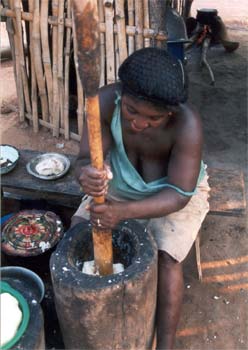
Fufu is a staple food throughout Western and Central Africa, similar to what mashed potatoes are to traditional American cooking. This dough-like food is made by boiling starchy foods like cassava, yams, plantains, or rice, then pounding them into a smooth, gummy mass.

Explore More African Food Content:

African Cuisine Guide - Traditional dishes and cooking methods
African Bread Basket - Staple foods and ingredients

For many Africans, stew and fufu is a classic meal combination, comparable to soup and crackers in Western cuisine. The neutral taste of fufu makes it the perfect accompaniment to flavorful African stews and soups.

How to Eat Fufu: Step-by-Step Guide

The Proper Technique

  1. Tear a small portion - Take a walnut-sized piece of fufu with your right hand
  2. Form a indentation - Use your thumb to make a small well in the fufu ball
  3. Scoop the stew - Use the fufu to scoop up stew or soup
  4. Swallow without chewing - Traditional fufu is swallowed whole with minimal chewing
  5. Save the meat - In West Africa, diners often eat the fufu and sauce first, saving the meat for last

Important Cultural Note

Always use your right hand only when eating fufu. Using your left hand is considered insulting and rude in many African cultures, as the left hand is traditionally reserved for hygiene purposes.

Types of Fufu Across Africa

Fufu can be prepared using various starchy ingredients depending on the region:

  • West Africa: Cassava, yams, plantains
  • Central Africa: Cassava, cornmeal
  • East Africa: Plantains, potatoes
  • Modern variations: Rice, millet, semolina

Traditional Plantain Cassava Fufu Recipe

Ingredients

  • 3 green or yellow plantains
  • 1 medium cassava root
  • 2 tablespoons all-purpose flour
  • 1 teaspoon salt
  • 1/4-1/2 cup water

Instructions

  1. Peel and cut plantains and cassava into even pieces
  2. Place in large pot and cover with water
  3. Boil until soft, about 20 minutes
  4. Drain and transfer to a mixer
  5. Add salt and flour
  6. Whip until consistency of soft dough is achieved
  7. Add water gradually if needed
  8. Fufu should be stiffer than mashed potatoes
Plantain Cassava Fufu Recipe - finished dish

Fufu Eating Etiquette and Cultural Notes

Dining Customs

  • Hand washing: Always wash hands before and after eating
  • Right hand only: Strictly use your right hand for eating
  • No utensils: Traditional fufu is always eaten by hand
  • Communal eating: Often served from a shared bowl
  • Respect hierarchy: Elders are typically served first

Common Fufu Accompaniments

Fufu is typically served with flavorful soups and stews such as:

  • Groundnut soup (peanut soup)
  • Light soup with fish or meat
  • Palm nut soup
  • Okra soup
  • Egusi soup (melon seed soup)

Frequently Asked Questions

Can I eat fufu with utensils?

While traditional purists eat fufu only with their hands, modern adaptations sometimes allow utensils, especially in formal settings or for beginners. However, to experience the authentic cultural practice, try eating with your hands.

What does fufu taste like?

Fufu has a very mild, slightly starchy flavor that serves as a neutral base for the flavorful stews and soups it accompanies. The texture is dough-like and smooth.

Is fufu healthy?

Fufu is high in carbohydrates and provides energy. When made with nutritious ingredients like plantains and cassava, it offers vitamins and minerals. Balance it with protein-rich stews for a complete meal.

Explore and Understand Africa Through Her Food and Culture

Article by Chic African Culture | African Food, Fufu Recipe, West African Cuisine

Cite The Source

Copy & Paste Citation

One click copies the full citation to your clipboard.

APA Style: Click button to generate
African woman farmer

She Feeds Africa

Before sunrise, after sunset, seven days a week — she grows the food that keeps the continent alive.

60–80 % of Africa’s calories come from her hands.
Yet the land, the credit, and the recognition still belong to someone else.

Read her story →

To every mother of millet and miracles —
thank you.

The African Gourmet Foodways Archive

Feeding a continent

African Gourmet FAQ

Archive Inquiries

What is The African Gourmet Foodways Archive?

We are a structured digital repository and scholarly publication dedicated to documenting, analyzing, and preserving African culinary heritage. We treat foodways—encompassing ingredients, techniques, rituals, ecology, labor, and trade—as primary sources for cultural understanding. Our 19-year collection (2006–present) is a living timeline, connecting historical research with contemporary developments to show cultural evolution in real time.

Why "Gourmet" in the name?

The term reflects our origin as a culinary anthropology project and our enduring principle: discernment. "Gourmet" here signifies a curated, sensory-driven approach to preservation. It means we choose depth over breadth, treating each entry—whether a West African stew or the political biography of a cashew nut—with the scholarly and contextual seriousness it deserves.

What is your methodological framework?

Our work is guided by a public Methodological Framework that ensures transparency and rigor. It addresses how we verify sources, adjudicate conflicting narratives, and document everything from botanical identification to oral history. This framework is our commitment to moving beyond the "list of facts" to create a reliable, layered cultural record.

How is content selected and organized?

Curration follows archival principles of significance, context, and enduring value. Each entry is tagged within our internal taxonomy (Foodway, Ingredient, Technique, Ritual, Ecology, Labor, Seasonality, etc.) and must meet our sourcing standards. We prioritize specificity—tagging by ethnolinguistic group, region, and nation—to actively prevent a pan-African flattening of narratives.

What geographic and cultural scope do you cover?

Our mission is comprehensive preservation across all 54 African nations. A core principle is elevating underrepresented cultural narratives. You will find deep studies of major cuisines alongside documentation of localized, hyper-specific practices that are often excluded from broader surveys.

How do you handle sources when archives are silent?

When written records are absent, we cite living practice as a valid source. We employ rigorous ethnographic standards: interviews are documented (with permission), practices are observed in context, and knowledge is attributed to specific practitioners and communities. This allows us to archive the intangible—sensory knowledge, oral techniques, ritual contexts—with the same care as a printed text.

Can researchers and the public access the archive?

Absolutely. We are committed to accessibility. The full 19-year collection is searchable and organized for diverse uses: academic research, curriculum development, journalistic sourcing, and personal education. We encourage citation. For in-depth research assistance, please contact us.

How does this work ensure genuine cultural preservation?

By consistently applying our framework since 2006, we have built more than a collection; we have created an irreplaceable record of context. We preserve not just a recipe, but its surrounding ecosystem of labor, seasonality, and meaning. This long-term, methodical commitment ensures future generations will understand not only *what* was eaten, but *how* and *why*, within the full complexity of its cultural moment.